


All products sold on this website are intended for research and identification purposes only and are not intended for human dosing, injections, or ingestion. These products are not FDA-approved to diagnose, treat, cure, or prevent any disease. By purchasing, you certify they will be used solely for legitimate laboratory research and not for human or animal consumption.
Cagrilintide is a synthetic, long-acting analog of the naturally occurring peptide amylin. It is studied in laboratory and preclinical models for its ability to activate amylin and calcitonin receptors, contributing to the regulation of metabolic and neuroendocrine pathways. Research has examined its role in modulating satiety signals, gastric emptying, and systemic metabolic processes.
Research into amylin biology began in the late 20th century with its identification as a pancreatic peptide co-secreted with insulin. Native amylin was found to influence metabolic regulation but was limited by rapid degradation. Cagrilintide was later developed as a stabilized analog with prolonged receptor activity, providing a research tool for studying calcitonin receptor family signaling and endocrine cross-talk in metabolic systems.
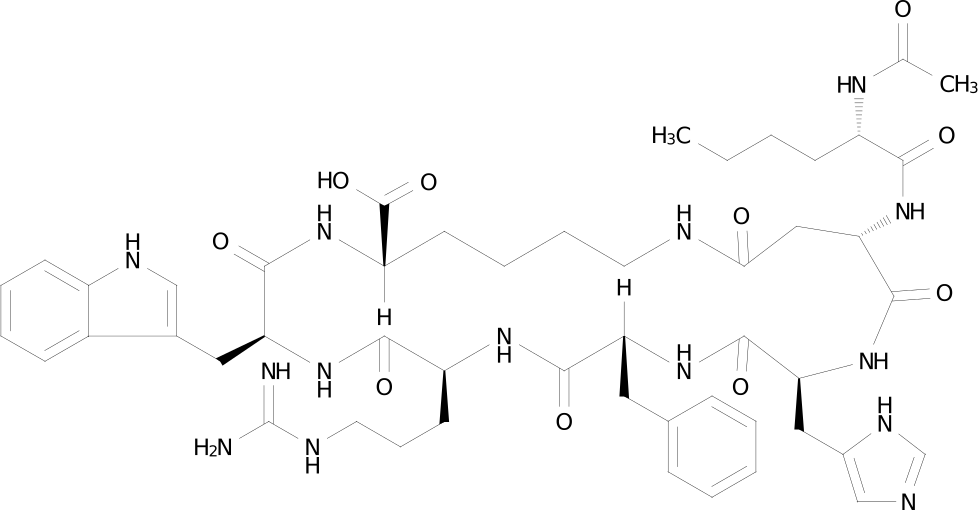
CAS #: 1415456-99-3
Molecular Formula: C₂₉₄H₄₆₆N₈₄O₈₈S₂
Molecular Weight: 6781.6 g/mol
PubChem ID: 137465331
Cagrilintide has been studied in metabolic, endocrine, and systemic models, with research highlighting its role in appetite regulation, energy balance, and weight-related pathways. Studies also report activity in amylin receptor signaling, glucose regulation, and metabolic homeostasis in preclinical and clinical settings.
Key Areas of Research::
• Metabolic: appetite, energy balance, weight regulation
• Endocrine: amylin signaling, glucose control
• Systemic: metabolic homeostasis, resilience, recovery
Together, these findings suggest broad experimental potential for Cagrilintide across metabolic, endocrine, and systemic pathways. By engaging amylin receptor biology and influencing appetite and glucose regulation, Cagrilintide provides a versatile platform for research into metabolic balance, weight biology, and systemic regulation in laboratory models.